Across the U. s., demonstrators have spent the past few weeks protesting against the racial disparities in the country”s criminal justice system. There’s plenty of date to them, the back-up, Black and Hispanic people are stopped more frequently, including traffic stops.and are more likely to be arrested. The eleven stopped, the police are more likely to use the force against, it and kill Black citizens. And then once in jail, Black defendants are more likely to be denied bail, which in turn makes a conviction more likely. And when convicted, sentencing is so biased against Black defendantswith Black defendants more likely to be incarcerated.
The data seems to overwhelmingly point to a criminal justice system riven by racial bias. But, remarkably, it could be even more overwhelming than some studies make it seem. That’s because of a statistical quirk called “collider bias,” a kind of selection bias, that means that the crime data that shows the racial bias is itself, biased by racist practices. If you thought the crime data showed clear evidence of racism before understanding how hadron collider bias affects these analyses might make it even clearer.
To understand how all this works, we’re going to get mathy. In particular, we’re going to be talking a lot about denominators, which, if you’ll remember your fourth grade math lessons, are the numbers on the bottom of the “fraction”. For our purposes, though, that you can think of them as the universe of people who are being studied.
The Police engage with only a small subset of the population they see, so if we look at the statistics about those interactions, and the stats are that we get informed by the that the smaller the sample. And if there’s bias in who the police choose to interact with — if it’s not a random sample — that-can-change-the-relationships-you-see-in-the-daylight.
There are two main ways that researchers approach this problem by using a “population denominator, and an encounter denominator.”
The former, for example, to compare the fraction of Black people in the general population who are arrested or harmed to that same statistic for white people. That’s how you get studies that show 96 out of 100,000 for Black men and boys will be killed by the police over the course of their lifetimes, compared to 39 out of 100,000 white men and boys — a risk that is 2.5 times higher. Seems straightforward enough. But because Black and white people encounter the police at different rates, to begin with, the population using the denominators might not lend itself to an apples-to-apples comparison; being more likely to encounter the police means that you’re more likely to encounter the police force, too.
For this reason, many researchers choose to look at the set of people who have encountered the police. This is the “encounter denominator.” The setup is simple: You look at all the people who had recorded encounters with the police — a date which is not always easy to obtain and calculate the proportion that involved the use of force. But in this approach you have a different issue, as a recent paper pointed out the if there’s bias in who gets stopped in the first placethen, looking at discrepancies in the resulting interactions I won’t give you the full picture. This is because of something called “collider bias.”
“The vast majority — 99.9 percent-of-the-data — we never get to see,” he said to sam and Dean Knox, a professor of politics at Princeton university and one of the authors of the study. “We just don’t see all the times when police officers are encountering civilians on the street. And that’s a huge problem, because among the data that you jo get to see the stops and the arrests, and the use of force that the officers in the record — those are already contaminated, because officers have discretion in who they choose to engage.”
The fact that the researchers’ data comes from a biased sample — who the police choose to stop, rather than for the full sample of possible stops might skew the conclusions we draw from it. “If we’re using administrative data, we always need to be aware of what a world those data to capture, and what they don’t capture it,” said Allison P. Harris, a political science professor at Yale, who studies racial disparities in the criminal justice system. With policing, we just can never know what there’s a record of.”
One example of an encounter denominator approach is in the 2019 study by Roland Fryer, an economist at Harvard university. I have found that the police shoot a white, Black and Hispanic Act to whom they’ve stopped at equal rates. At first blush, that would seem like evidence that the police are not racially biased — every demographic is being treated equally, after all.
But we know that police officers are more likely to stop Black and Hispanic people than for white one and that the more of those stops are unfounded. Researchers measure this with something called the “hit rate” or the rate at which contraband is actually found in the people who were stopped. The low hit-rate implies bias because it means that the decision to search someone that was made with less evidence. The White people stopped in New York City, for example, were more likely to be carrying a weapon than Black, and the people, the Hispanic who were stopped. The White drivers are stopped by the police, were more likely to have contraband then Black and Hispanic drivers nationally.
The political scientists Knox, Will Lowe and Jonathan Mummolo, among others, have pointed out, that complicates Fryer’of the findings. All of a sudden, what at first appeared to be equal treatment actually suggests unequal treatment. Because of the initial discrimination in who gets stopped, the sample of stopped people, it isn’t the same across races. The different hit rate, indicates that the stopped white people are actually more likely to have contraband, on average, than stopped, Black people. In other words, in a world without discrimination in who was stopped — if the Black and the white people who were stopped were equally likely to be engaged in criminal activity — you’d see an even bigger disparity in outcomes.
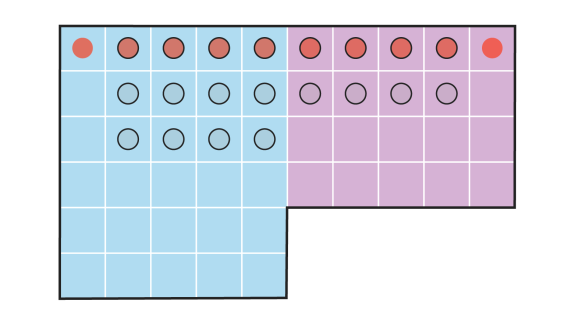
It’s unintuitive, I know, but let’s break it down visually.


“The data that we have to pick up halfway through the encounter, after the price tends to increase the bias very likely have already exerted an effect,” said Mummolo, a professor at Princeton university. And without knowing the racial composition of the people who are sighted by police, but you aren’t stopped, it’s impossible to fully correct for the bias. The paper provides a suggestion for how to estimate the bias in the one-part-of-the-chain — use-of-force-in the encounter — but it doesn’t capture any of the potential disparities that occur beforehand that make the war likelier.
So if the racial bias in the police force stop makes it hard to estimate racial disparities in how people are treated while stopped, you might be to embrace the newness and the excitement of: “well, this doesn’t affect all of the other components of the chain, too?
“We need to think about this, the “this” complex system,” said Knox. There are biases layered on biases and social decisions-like how society will arise in the world in the united states-versus-policing, and individual decision-like who the police choose to stop, or arrest, and who is ultimately charged or convicted. “It just compounds all the way down the line,” Knox said.
The thing about systemic racism-is-it’s just that: reporting.
Ultimately, the fact that these biased events build on each other, should be a reminder that we’re not capturing the entire process surrounding the stats, we’re looking at. Essentially, all of the discrimination that we can actually measure at each specific stage is an underestimate of how much is actually happening.
