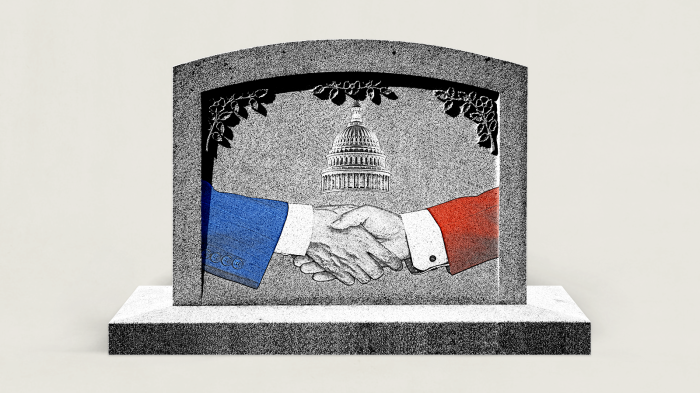
Congress is in full-on chaos mode right now, with the future of infrastructure, government funding, the debt limit and voting rights all uncertain. But at the heart of the chaos is a core disagreement over a basic tenet of governing: Is bipartisanship still possible?
Sens. Joe Manchin and Kyrsten Sinema certainly both think it is. They are so strong in their commitment to working across party lines that they stand alone among Democratic senators in objecting to changing the filibuster.
But they are lone voices for a reason: The political environment most senators inhabit makes public bipartisanship anywhere from difficult to politically suicidal. This is for a variety of reasons, including that so much of our politics is now nationalized, that party leaders keep most potential “bipartisan” bills from reaching the floor and, perhaps most importantly, that the national parties are now geographically isolated, meaning there’s minimal overlap in the interests and values the parties represent.
This is, of course, not limited to the Senate, but for the purposes of this article, I’m focusing primarily on how bipartisanship has largely disappeared from the Senate, as that’s historically where more bipartisanship has taken place.
To understand why a senator like Manchin is such a strong and singular proponent of bipartisanship, it helps to understand just how rare a senator like him is. He is one of just six senators who represent a state that voted for the other party in the most recent presidential election — and one of just two senators whose state voted for the other party’s presidential nominee by at least 10 points in 2020.
